karachi
Karachi 2026

TIIP Level 1 Training

Khalil Center’s signature TIIP Level 1 training is now being offered in Karachi, Pakistan! Limited seats and high demand.

Register Here

You are a perfect for this training if you fit into one of the following categories: 

  1. Currently enrolled in a graduate program in related mental health fields (Counseling, psychology, social work, marriage & family therapy, etc.)

  2. Mental health professional (therapist, psychotherapist, psychiatrist, counselor, etc.) 

  3. Chaplain with a background/training in mental health

  4. Islamic seminary graduates with a background in psychology/mental health. 

Not sure? Email us at [email protected] 

Course Description

Level 1

This is a 4-day intensive on Traditional Islamically Integrated Psychotherapy (TIIP) Level 1. The training will provide students of psychology and mental health with an orientation to the foundational tenets &  principles of the model including a discussion of Islamic epistemology, i.e., a framework for reconciling disparate sources of knowledge (i.e. empirical, rational, and scriptural) within an Islamic context.  The core principles of the model will be presented that include a review of holistic schemas of health and pathology, nature of the human being, composition of the human psyche, principles of change, and role of the TIIP practitioner. 

Students will engage with practical applications of this model through two types of techniques:

  • Inherently Islamic approaches of psychotherapy. Inspired by the Qur’an, Prophetic Tradition, and the traditions of the scholars of the spiritual sciences (taziyah al-nafs). 

  • Adaptation and integration of mainstream interventions.  Methods drawn from contemporary orientations that are consistent with the foundational principles of TIIP. 

The course will also teach students to conceptualize and treat psychological dysfunction using this Islamic model.  

Interventions are designed to specifically target the elements of the TIIP ontological framework of the human psyche: 

  • ʿAql - cognition

  • Nafs - behavioral inclinations

  • Rūh - spirit 

  • Ihsās - emotions.

Level 1 Details

Tuition

Tuition costs cover registration to the entire course, daily brunches, and course materials (relevant handouts, worksheets, charts, etc.)

  • General Tuition: PKR 100,000

*The tuition cost does not include travel, required books, and accommodation expenses. Students are expected to arrange for their own transportation and lodging. 


Date: April 24 - 26, 2026 


savera
Location

Soorty Enterprise, Unit #9


In the heart of Pakistan, Savaira emerged from the profound love and compassion of Dr. Yasmeen and Dr. Asif. Driven by a deep-rooted connection to Pakistan, Dr. Asif & Dr. Yasmeen returned after 20 years abroad, leaving behind their life in the USA. Their mission was clear: to create a sanctuary for mental wellbeing.

With like-minded individuals, Savaira was born—a beacon of hope, offering support and counseling to those in need. Our journey is a testament to resilience, fueled by love and compassion. Together, we’re shaping a mentally resilient Pakistan where hearts heal, minds mend, and hope prevails.

Welcome to Savaira, where every story finds understanding, every heart finds solace, and every life finds inspiration.

Location


soorty
Event Details:

Time and Date

Training Dates:
24th – 26th April 2026

Timings:
9:30 AM – 6:00 PM (Including refreshments and lunch)

Location:
Soorty Enterprise, Unit #9


Location Deatils

Instructors

Interested in taking our TIIP training? Register Today!

Course Schedule

6:00 – 7:00 PM
  • Opening Remarks & Introductions

7:00 – 9:00 PM
H. Keshavarzi
  • Foundations of Traditional Islamically Integrated Psychotherapy (TIIP)

  • Reading

    • Keshavarzi, H & Ali, B (2018). Islamic Perspectives on Psychological and Spiritual Well-being and Treatment, in H. S. Moffic,,J. Peteet, A. Hankir, R. Awaad, Islamophobia & Psychiatry: Recognition, Prevention, and Treatment. New York: Springer. Pp. 41-54

    • Khan, F. & Keshavarzi, H. (2023). Theoretical foundations and clinical applications of Traditional Islamically Integrated Psychotherapy (TIIP). In Richards, S., Kawika, G., & Judd, D. (Eds.) Handbook of Spiritually Integrated Psychotherapies. American Psychological Association Press.

9:00 – 10:45AM
H. Keshavarzi
  • Intro to TIIP Model and Conceptualization

  • Reading

    • Keshavarzi, H., Khan, F., Ali, B. & Awaad, R. (Eds.) (2020). Applying Islamic Principles to Clinical Mental Health Care: Introducing Traditional Islamically Integrated Psychotherapy. New York: Routledge. Chapter 1

    • Khan, F., Keshavarzi, H., Ahmad, M., Ashai, S., & Sanders, P. (2023). Application of Traditional Islamically Integrated Psychotherapy (TIIP) and its outcome on psychological distress among American Muslims in outpatient therapy. Spirituality in Clinical Practice. Advance online publication.

10:45 – 11:30 AM
H. Keshavarzi
  • Activity – Conceptualize Your Patient According to TIIP Case Vignettes (4) (ex. Emotional case, Cognitive Case, Spiritual Case, Behavioral issues case)

11:30 – 11:45 AM
  • Break

11:45 AM –1:00 PM
F. Khan
  • Role of the TIIP Practitioner

    • Delineating role

    • Internal Characteristic requirements

    • External Characteristic requirements (ex. Skills, training, education, etc).

    • Examining different roles across Islamic disciplines ex. (Murabbī, Shaykh, Musliḥ, Ṭabīb, Psychologist, Faqīh etc).

  • Reading

    • Keshavarzi, H., Khan, F., Ali, B. & Awaad, R. (Eds.) (2020). Applying Islamic Principles to Clinical Mental Health Care: Introducing Traditional Islamically Integrated Psychotherapy. New York: Routledge. Chapter 2

1:00 –2:30 PM
  • Lunch & Jummuah Break

2:30 – 4:00 PM
F. Khan
  • Case Conceptualization according to Traditional Islamically Integrated Psychotherapy (TIIP)

  • Assessment according to (TIIP) & the early stages of counseling.

  • Stages of Change

  • 5 assessment principles

  • Prophetic Empathy

  • Empathy Response Styles

  • Reading

    • Keshavarzi, H., Khan, F., Ali, B. & Awaad, R. (Eds.) (2020). Applying Islamic Principles to Clinical Mental Health Care: Introducing Traditional Islamically Integrated Psychotherapy. New York: Routledge. Chapter 5

4:00 – 5:00 PM
F. Khan
  • Role-play: Conducting Initial Sessions

9:00 – 10:00 AM
H. Keshavarzi & F. Khan
  • Open Q & A

10:00 AM – 12:00 PM
H. Keshavarzi
  • Process Experiential/Emotion-Focused Modalities of Intervention

  • Utilization of Emotion-Focused Interventions for facilitation Emotional regulation and transformation

  • Emotional Signature Interventions

  • Reading

    • Keshavarzi, H., Khan, F., Ali, B. & Awaad, R. (Eds.) (2020). Applying Islamic Principles to Clinical Mental Health Care: Introducing Traditional Islamically Integrated Psychotherapy. New York: Routledge. Chapter 9 Pp. 236-266

12:00 – 1:00 PM
H. Keshavarzi
  • Roleplay/Demonstrations

1:00 – 2:00 PM
  • Lunch & Dhuhr Break

2:00 – 3:30 PM
F. Khan
  • Cognitive theories in Islam and role of ʿaql

  • ʿAql in the Islamic tradition

  • Difference between mind, brain, and ʿAql Cognitive psychotherapy (RIDA Model) will be introduced with case illustrations and discussions.

  • Reading

    • Keshavarzi, H., Khan, F., Ali, B. & Awaad, R. (Eds.) (2020). Applying Islamic Principles to Clinical Mental Health Care: Introducing Traditional Islamically Integrated Psychotherapy. New York: Routledge. Chapter 8

3:30 – 4:00 PM
F. Khan
  • TIIP Cognitive Signature Interventions

4:00 – 5:00 PM
F. Khan
  • Outlining a Case Illustration of Traditional Islamically Integrated Psychotherapy (TIIP)

  • Reading

    • Keshavarzi, H. & Khan, F. (2018). Outlining a case example of Traditional Islamically Integrated Psychotherapy (TIIP). In Al-Karam, C. Y. (Ed.). Islamically Integrated Psychotherapy: Processes and outcomes with Muslim clinicians. (175-207). West Conshohocken, PA: Templeton Press.


Course Textbook Level 1

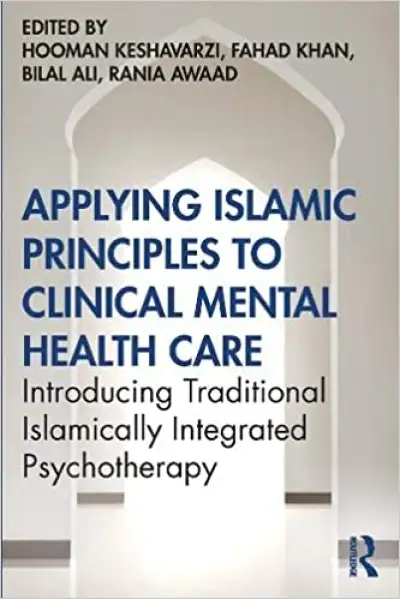
Applying Islamic Principles to Clinical Mental Healthcare

Widely circulated in academic circles across the world, this text will serve as the primary reference for the TIIP training. Authored by Khalil Center leadership, this text was the first ever structured articulation of an emerging Islamic orientation to psychotherapy known as TIIP. If you plan on attending the training, we would encourage you to get your hands on this and get busy reading! 

Course Textbook Level 2

This workbook provides a much-needed manual for those struggling with OCD scrupulosity and assists them during their journey to recovery. It includes activities and exercises that readers can put into effect on their own. The workbook will serve as a unique resource for clinicians, clergy, and clients in providing Islamically integrative psychoeducation and offering intervention methods in different domains (cognitive, behavioral, & emotional).

Categories: Event, Training