tower bridge at night under 5mb
Level 1

TIIP London, 2027

January 14th - 17th, 2027
Khalil Center’s signature TIIP training is back again, and now it’s coming to London for the first time! Seats are limited and in high demand.

Register Now

Who should take this training?

You are a perfect for this training if you fit into one of the following categories: 

  1. Currently enrolled in a graduate program in related mental health fields (Counseling, psychology, social work, marriage & family therapy, etc.)

  2. Mental health professional (therapist, psychotherapist, psychiatrist, counselor, etc.) 

  3. Chaplain with a background/training in mental health

  4. Islamic seminary graduates with a background in psychology/mental health. 

Not sure? Email us at [email protected]

Course Description

Level 1

This is a 4-day intensive on Traditional Islamically Integrated Psychotherapy (TIIP) Level 1. The training will provide students of psychology and mental health with an orientation to the foundational tenets &  principles of the model including a discussion of Islamic epistemology, i.e., a framework for reconciling disparate sources of knowledge (i.e. empirical, rational, and scriptural) within an Islamic context.  The core principles of the model will be presented that include a review of holistic schemas of health and pathology, nature of the human being, composition of the human psyche, principles of change, and role of the TIIP practitioner. 

Students will engage with practical applications of this model through two types of techniques:

  • Inherently Islamic approaches of psychotherapy. Inspired by the Qur’an, Prophetic Tradition, and the traditions of the scholars of the spiritual sciences (taziyah al-nafs). 

  • Adaptation and integration of mainstream interventions.  Methods drawn from contemporary orientations that are consistent with the foundational principles of TIIP. 

The course will also teach students to conceptualize and treat psychological dysfunction using this Islamic model.  

Interventions are designed to specifically target the elements of the TIIP ontological framework of the human psyche: 

  • ʿAql - cognition

  • Nafs - behavioral inclinations

  • Rūh - spirit 

  • Ihsās - emotions.

Register Today
Level 1 Details

Timings

Note: Timings are in GMT.

  • January 14 - January 17th

  • Thursday January 14th, Saturday January 16th, & Sunday January 17th 10 AM - 4 PM

  • Friday January 15th 3 PM - 8 PM

Tuition

Tuition costs cover registration to the entire course, daily brunches, and course materials (relevant handouts, worksheets, charts, etc.)

  • General Tuition: $989.00 USD*

  • Student Tuition: $855.00 USD*

    • For access to student tuition, please email your student ID or transcript to [email protected]

*The tuition cost does not include travel and accommodation expenses. Students are expected to arrange for their own transportation and lodging. 

ibn sina logo leaf wide 1

Our Partners

Ibn Sina Sanctuary

Ibn Sina Sanctuary is a Muslim mental health and wellbeing platform integrating evidence-based psychotherapy with Islamic psychology. Founded by psychotherapist Rebecca Kibria, the organisation is building an accessible ecosystem of mental healthcare through three pillars: The Sanctuary, providing professional and affordable online therapy; Sirr, an AI-integrated journalling and self-reflection platform; and Suluk Space, a community dedicated to psycho-spiritual education and personal growth.

Having supported over 500 clients through more than 5,000 therapy sessions, Ibn Sina Sanctuary is working to reshape how mental healthcare is understood, accessed and experienced within Muslim communities, without asking individuals to compromise their faith or cultural identity.

Our Instructors

hooman keshavarzi1
Executive Director

Dr. Hooman Keshavarzi

Dr. Hooman Keshavarzi is a licensed clinical psychologist and the founder of Khalil Center, the largest provider of Muslim mental healthcare in North America. He holds a Doctorate and Master’s in Clinical Psychology, and he is Programme Director and Assistant Professor of Islamic Psychology at Hamad Bin Khalifa University in Doha. A senior fellow of the International Association for Islamic Psychology, he has published peer-reviewed research on bringing Islamic spirituality into psychological practice. He has also studied Islamic theology for many years, most recently at Darul Qasim in Chicago.

fahad khan
Deputy & Clinical Director

Dr. Fahad Khan

Dr. Fahad Khan is a licensed clinical psychologist with a Doctorate in Clinical Psychology. He is Assistant Professor of Islamic Psychology at Hamad Bin Khalifa University. At Khalil Center he supervises clinical and research work, and he is a fellow of the International Association of Islamic Psychology and an editor for several peer-reviewed journals. He memorised the Qur’an at 16. His awards include the American Psychological Association’s 2021 Early Career Psychologist Champion and 2020 Early Career Achievement Awards.

heba el haddad khalil center photo
Clinical Training & Educational Director

Dr. Heba El-Haddad

Heba El-Haddad is a TIIP practitioner who leads clinical education and training at Khalil Center’s Bay Area branch. She holds a Master’s in Clinical Psychology and is completing her doctorate. She contributed to Applying Islamic Principles to Clinical Mental Health Care, the book on the TIIP model. She previously taught mental health classes at Kaiser Permanente and has led trainings across the U.S. on mental wellness and Islamic psychology. She has also spent years studying Islamic sciences, including the Ihyā’ ‘Ulūm al-Dīn under a senior scholar.

lmc 6 minarets against blue sky (fred romero, cc by 2.0)

Location

London Muslim Centre / East London Mosque

The London Muslim Centre (LMC) is part of the East London Mosque complex on Whitechapel Road. The mosque grew out of the London Mosque Fund, set up in 1910, and opened its current Whitechapel Road building in 1985. The LMC opened next door in June 2004, adding halls, classrooms and community space, and the Maryam Centre followed in 2013 with facilities for women. Today the complex offers daily prayers, classes for children and adults, advice and counseling, and birth, marriage and funeral services for communities across East London.

46 Whitechapel Road, London, E1 1JX

Learn More

Hotels near London Muslim Centre

Interested in taking our TIIP training? Register Today!

Required Course Textbook

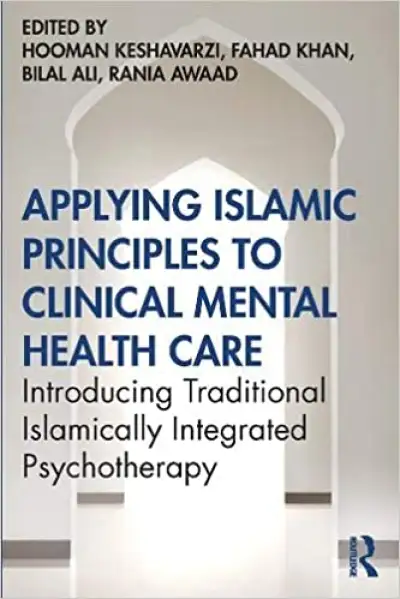
Applying Islamic Principles to Clinical Mental Healthcare

Widely circulated in academic circles across the world, this text will serve as the primary reference for the TIIP training. Authored by Khalil Center leadership, this text was the first ever structured articulation of an emerging Islamic orientation to psychotherapy known as TIIP. If you plan on attending the training, we would encourage you to get your hands on this and get busy reading! 


Safety Protocols & Procedures

  1. If taking public transportation, ensure that you are carrying pepper spray or personal safety equipment. 

  2. Familiarize yourself with the layout of the area you are staying at and survey the area walkways, facilities, and parking lots to mark which areas are adequately secured and well-lit.

  3. Plan the safest route to your destination; choose well-lit, busy pathways and streets.

  4. Share your travel schedule with your family, spouse, and trusted friends and give them your emergency contact information.

  5. At night, stick to well-lit areas whenever possible and avoid alleyways or "short cuts" through isolated areas.

  6. Travel in groups and avoid going out alone at night.

  7. If you are being followed, change direction and go to the nearest business or home; knock on the door, and request that someone call the Police. Note the description of the person following you.

  8. Walk near the curb and avoid shrubbery or other places of potential concealment.

  9. Tell a friend where you are going and what time you expect to return.

  10. Stay alert to your surroundings and the people around you. Walk with a confident stride; keep your head up and look around.

  11. Carry your purse close to your body and keep a firm grip on it; carry your wallet in an inside coat pocket and/or your front pant pockets.

  12. Keep your keys separate from your purse or backpack.

  13. Don't overload yourself with bags or packages and avoid wearing shoes that restrict your movements.

  14. If a motorist stops and asks for directions, keep your distance from the car.

  15. Park in well lighted areas, where your vehicle is visible; avoid parking next to vans or trucks.

  16. Keep all items out of sight, especially valuables. 

  17. Keep your vehicle locked at all times.

  18. Have your key ready when you approach your car. Before getting in, check inside and under your car to make sure no one is hiding.